

Have you ever noticed that dried beans often sit ignored on the supermarket shelf? I’m assuming it’s because people don’t want to take the time to cook them, or they simply don’t know how. Either way, it’s a shame, because dried beans are inexpensive, versatile and nutritious. Cooking dried beans should not cause you distress—and it won’t if you let your slow-cooker do all the work.
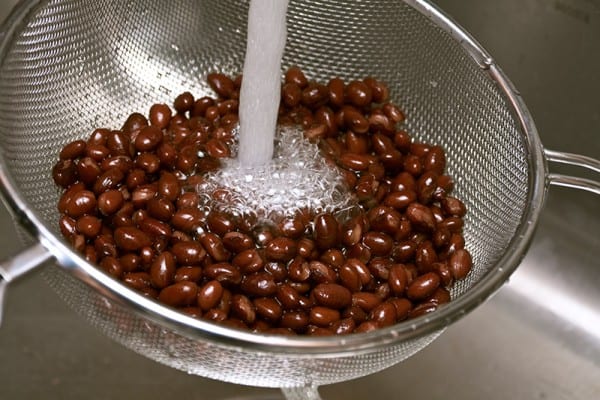
First, here’s some quick nutrition background on beans. Beans are the mature seed pods from legumes (plants whose seedpods split in half when the seeds inside are ripe). Along with other legumes—peas, soybeans and lentils—beans are a good source of protein and fiber (including soluble fiber, which can help lower cholesterol levels), as well as nutrients including iron and zinc.
Beans are widely available in both dried and canned forms, and no matter which you choose to use, including more legumes in your diet is a smart nutrition move. A half-cup of cooked beans counts as a serving, and the USDA’s Choose My Plate program allows them to count as either a vegetable or a protein—but not both in one meal.
How to Slow-Cook Dried Beans
This slow-cooking method is the one that my co-author and I use in our book, Everyday Gluten-Free Slow Cooking.
 Rinse and pick through the dried beans, then add them to your slow cooker. Cover the beans with at least two inches of water. Cover the crock and cook the beans for 8 hours on LOW (so easy to do overnight). Drain the beans and they’re ready to use. So easy! Use these precooked beans any way you would typically use canned beans. And here’s a neat idea: freeze some of the precooked beans for future use. I measure 2 cups of cooked beans into plastic freezer bags, since that amount is handy for most of my cooking needs.
Canned Beans for Back-Up?
Keeping canned beans in the pantry can be handy, of course. If you go the canned beans route, be aware that the sodium level will most often be higher than those you cook from dried at home, where you can control the amount of salt added (or add none at all).
To take advantage of canned bean convenience while also keeping sodium in check, choose beans labeled “no added salt” or “low sodium.” Also, get in the sodium-smart habit of rinsing and draining canned beans—it’s been shown to reduce the sodium in beans by about 40%.